30 September 2026
What Happens When a Social Media Platform Refuses to Pick a Side?
Read more

Events and Campaigns
Some conferences ask what the future of technology looks like. Tech for Palestine has spent the past year asking a more urgent question: who was technology built for in the first place?
Since emerging in response to Israel’s assault on Gaza and the censorship that followed across major platforms, the initiative has grown into an international network of engineers, founders, designers, organisers, and digital rights advocates. From city to city, it has brought people together not simply to talk, but to build. What began as a response has become a movement, shaped by the belief that the existing digital infrastructure isn't neutral, and that the systems governing speech, visibility, and memory can be challenged.
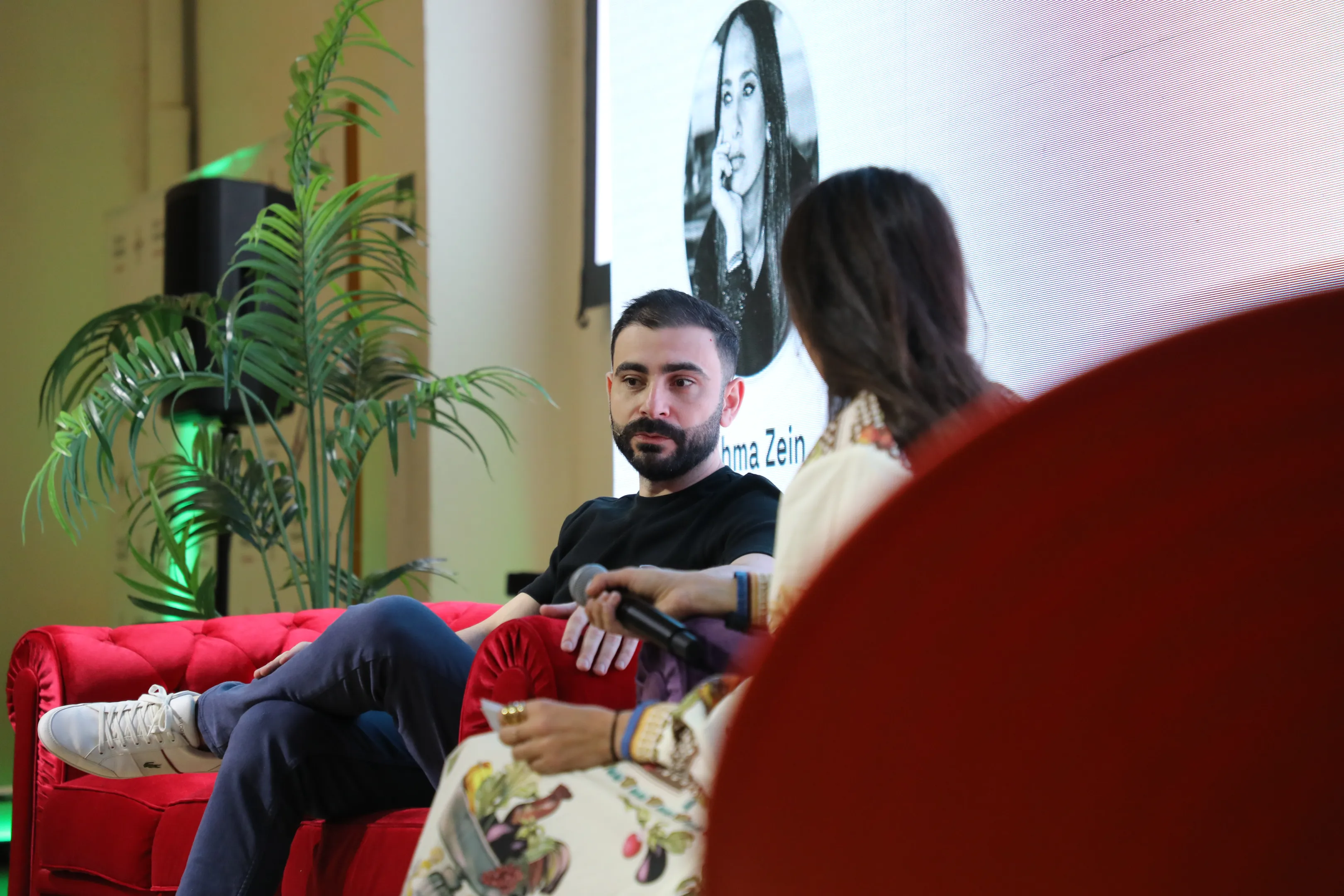
That spirit ran through Barcelona, where 250+ professionals and 20 speakers gathered at the Tech for Palestine conference on 11 April, 2026. One of the event’s most anticipated sessions was a fireside chat between Issam Hijazi, founder of UpScrolled, and journalist and activist Rahma Zein.
As Hijazi and Zein began speaking, the room was already sitting with a familiar tension. For millions of people, social media has become a public space, yet those spaces remain privately owned, opaque in their decisions, and selective in whose voices they protect.
Hijazi spoke about the point at which that contradiction became impossible to ignore. After years of working in Big Tech, he said he was devastated by the censorship and shadow banning of Palestinian voices across mainstream platforms. Staying inside those systems no longer felt possible, so he chose to build outside them.
That decision became UpScrolled.
Hijazi had already built the platform when he connected with Tech for Palestine, which provided community, connections and guidance at a pivotal early stage. His appearance in Barcelona to discuss UpScrolled’s growth and global reach carried the sense of a founder reconnecting with a community that recognised the vision early.
Its growth has been anything but quiet. What began with around 150,000 users has grown to more than 5.5+ million globally, driven in part by people leaving platforms they no longer trusted or felt aligned with. Hijazi was clear, however, that numbers alone were never the story.
He described building the platform in direct conversation with users through Zoom calls, online conferences, and continuous feedback. Rather than optimise for addiction or endless engagement, the aim, he said, was to listen first and build accordingly. Those conversations kept returning to the same concern - trust.
Users, Hijazi said, expect the platforms they rely on to “protect their data, respect their privacy and never be biased,” yet too many of the dominant players have done the opposite. “Unfortunately, that was not the case with existing social media platforms,” he said. “They sell your data to make more money and to make more profit. They don’t care about your privacy.”
Then came the line that landed hardest in the room. “Instagram is not the product,” he said. “We are the product inside Instagram.”
UpScrolled, by contrast, was built in rejection of that model. A chronological feed replaces manipulative ranking systems, and community interest, rather than algorithmic incentives, shapes what rises to the surface. At one point, Hijazi was keen to stress that the platform was not built for a niche audience or a single cause; it was for everyone, he said.
The conversation also turned to the question many founders avoid: who gets to fund the future? Hijazi spoke openly about rejecting venture capital tied to surveillance, infrastructure or technologies linked to occupation, making the case that capital is never separate from consequence.
In one of the sharpest exchanges of the session, he defended the platform’s decision to hard code certain mapping terminology so that searches for Israel display Occupied Territories of Palestine. For him, it was neither stunt nor provocation, but a refusal to reproduce digital erasure under the guise of neutrality.
Zein’s questions consistently widened the frame, drawing the discussion beyond one company and toward the larger struggle over narrative, legitimacy, and whose version of reality becomes embedded in the tools people use every day.
There was space, too, for the personal cost of taking that path. Hijazi reflected on what he called the loneliest part of the journey, when people in tech insisted he was crazy and would never reach one million users. He also spoke of the hostility directed at the platform, and of staying focused by remembering the people of Gaza.
Still, the session never tipped into cynicism. Hijazi said he continues to believe in building a platform that speaks for humanity, regardless of nationality.
That is the force Tech for Palestine continues to carry wherever it goes. In Barcelona, the most meaningful conversations weren’t about speed, scale or disruption. Instead they focused on dignity, memory, and what happens when the public comes before power. UpScrolled’s presence there felt less like a brand appearance than proof that people are already creating what they were told could not exist.
Download UpScrolled:
Watch the full video of the Tech for Palestine Conference in Barcelona.
The Fireside Chat with UpScrolled Founder, Issam Hijazi, starts at 1:03:00: https://www.youtube.com/watch?v=VgSwQv5QRAQ
30 September 2026
29 September 2026
1 September 2026
20 August 2026