30 September 2026
What Happens When a Social Media Platform Refuses to Pick a Side?
Read more
Censorship and Digital Rights
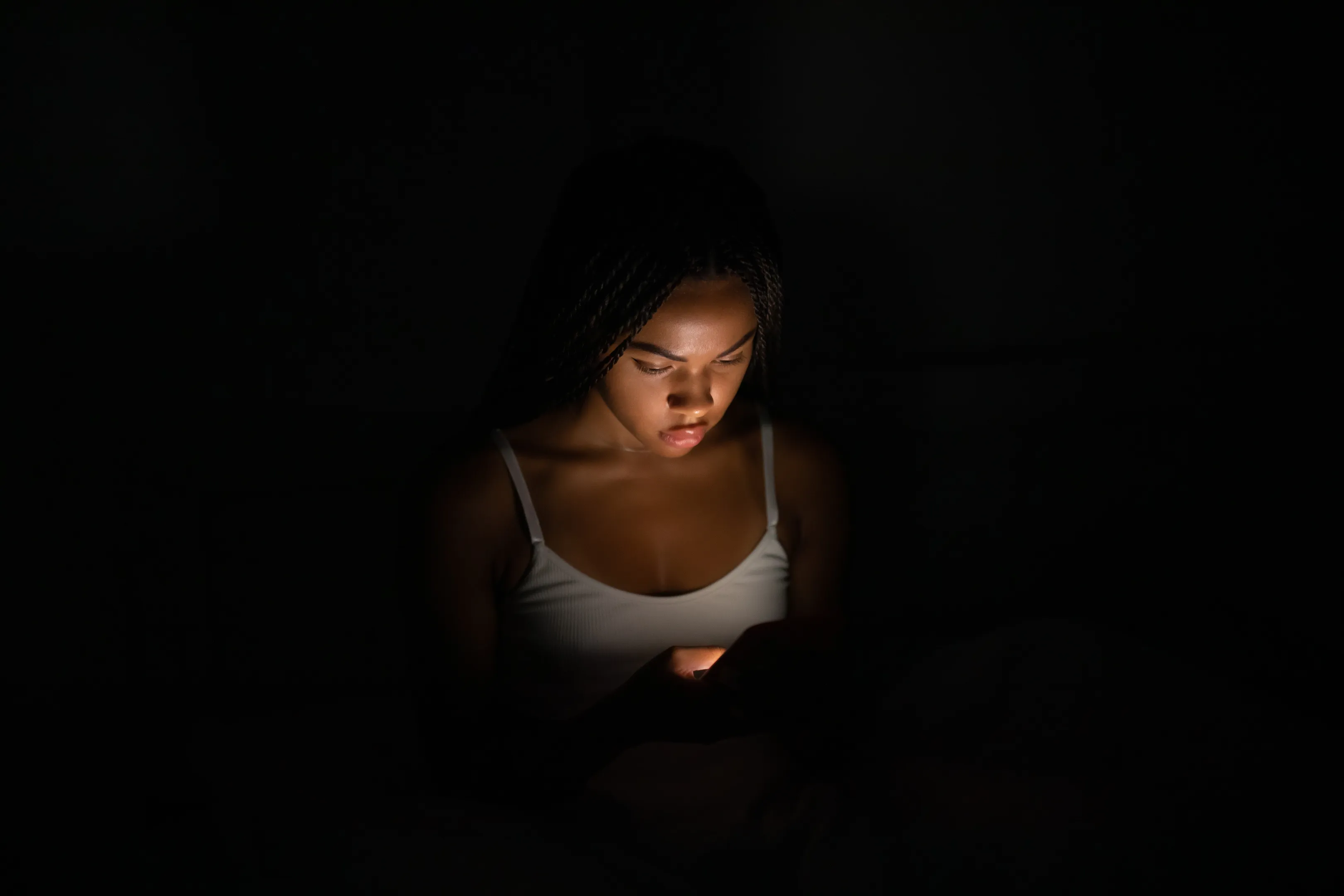
There is a particular kind of online silencing that affects your mental state and doesn’t appear to be censorship at first glance. You aren’t banned or suspended, and your post is still perfectly visible to you, like a receipt for a conversation that never happened. But the reach collapses anyway, quietly, cleanly, and with zero explanation. You start refreshing. You start rewriting. You start wondering whether you are being punished or whether you are simply no longer “good” at the internet. That uncertainty is the point.
People call it shadowbanning, although platforms tend to avoid the word. They prefer phrases like limiting visibility, downranking, reducing discoverability, or making content ineligible for recommendations. X, for example, explicitly describes “limiting post visibility” as a way to restrict reach and make a post less discoverable. The language is sanitised, but the effect is not. Shadowbanning is the practice of reducing a person’s distribution without clearly telling them, which turns speech into something you are allowed to post, but not allowed to reach anyone.
That’s why it is more dangerous than a ban. A ban is crude and obvious, and shadowbanning is a system of invisible pressure. That invisible pressure changes behaviour faster than any rulebook ever could.
What shadowbanning actually looks like
In the wild, shadowbanning rarely arrives as a single dramatic action; it shows up as a cluster of smaller restrictions that all land on the same nerve.
Sometimes it’s your post slipping to the bottom of feeds, where it technically exists but practically disappears. Sometimes it’s the slow removal of your content from discovery surfaces, so your followers might still see you, but nobody new can find you. Sometimes it’s search behaving oddly, where your handle becomes hard to locate unless someone types it perfectly, or your posts stop appearing under hashtags that used to drive reach.
Sometimes, it is more subtle still. Your comments stop showing up in threads, and your stories do not surface. Your reels or videos suddenly underperform in a way that feels less like a bad day and more like a locked door. The thing that makes it shadowbanning, rather than normal fluctuation, is the fog. You are left with consequences, but no process.
Researchers have a name for what people do next. They build “folk theories” about platform governance, swapping tips, running experiments, changing language, and trying to reverse engineer moderation systems that refuse to be legible. A widely cited paper on the shadowbanning controversy describes how these beliefs and narratives become a form of algorithmic folklore, because the official explanations are too thin to match the lived experience. SAGE Journals
So creators become their own investigators, not because they enjoy it, but because uncertainty forces them into it.
The psychological cost of invisible punishment
Here is the part that deserves more attention than it gets: shadowbanning not only limits reach, it also damages people’s sense of reality online because it creates a mismatch between what you do and what happens next.
You post; nothing happens. You post again, softer this time, and still nothing. You start stripping your point of view down to something safer, smaller, less likely to trigger whatever invisible wire you think you touched. That is not a healthy public sphere; it’s behaviour modification through opacity.
Recent medical and behavioural research has begun to describe the emotional fallout of being made invisible online, including anxiety, compulsive checking behaviours, and low mood, because invisibility interrupts the normal feedback loops people rely on when they communicate. You don’t need to be “addicted to likes” for this to hurt. Humans are social creatures; we orient ourselves through response and recognition. When a platform silently removes recognition while telling you everything is fine, it’s not neutral, it’s destabilising.
Now layer in the obvious inequality. If you are already the kind of person who gets flagged more often, misunderstood more often, or reported more often, then you live closer to the edge of these systems every day. A University of Michigan study reported on how marginalised users describe experiences of being shadowbanned or having visibility restricted, highlighting that the harm is not just technical; it is social and cumulative.
When shadowbanning becomes a human rights issue
Shadowbanning is often framed as a creator economy drama, a dispute about engagement graphs and reach. That framing is convenient because it makes the problem sound petty. But the stakes shift completely when visibility restrictions cluster around political speech, advocacy, and documentation of violence.
Human Rights Watch published a detailed report in December 2023 arguing that Meta’s content moderation policies and practices resulted in systemic censorship of Palestine-related content across Instagram and Facebook, including patterns of removals and suppression, particularly after October 7, 2023. Human Rights Watch+1. Access Now published its own report describing censorship and suppression of Palestinian and pro-Palestinian voices across Meta’s platforms, framing it as systemic rather than accidental. Access Now+1
You do not have to agree with every political position in that debate to understand the core risk. When platforms can quietly reduce the distribution of lawful speech, especially in moments when documentation and witness accounts matter, then the platform is not just hosting discourse. It’s shaping what history looks like in real time.
Because the mechanisms are often automated and difficult to appeal, the harm lands unevenly, with the same communities repeatedly doing the exhausting work of proving they are being suppressed, while the system keeps insisting it’s simply “ranking.”
The uncomfortable incentive nobody wants to talk about
Shadowbanning thrives in a business environment where attention is monetised, and distribution is power. Platforms do not just remove content; they tune visibility, they decide what travels, what stalls, and what never quite makes it into the room.
Once you accept that reality, you can see why stealth moderation is so attractive: it’s flexible, it’s scalable, and it avoids public accountability. It also keeps creators guessing, which keeps them working harder inside the system, trying to adapt, trying to please it, trying to buy their way back to reach when nothing else makes sense.
A Yale SOM summary of research on shadowbanning warns that selectively muting and amplifying posts can shift opinions or increase polarisation, even when the platform appears neutral to outside observers, precisely because the control is subtle and hard to detect. Yale Insights
This is not about one feature or one platform; it’s about whether we accept an internet where speech can be quietly throttled without due process.
Download UpScrolled:
30 September 2026
29 September 2026
1 September 2026
20 August 2026